














6 Managed Switch Features That Improve Network Performance


Modern businesses depend on reliable network connectivity for almost every part of their daily operations. Employees use cloud applications, video conferencing, VoIP systems, shared storage, business software, and online platforms throughout the working day.
As network traffic increases, simply connecting devices is no longer enough. Businesses need greater control over how traffic moves through the infrastructure and how network resources are allocated.
This is where Managed Switch Features become particularly important.
Managed switches provide administrators with configuration, monitoring, traffic-management, and network-control capabilities that are not typically available on basic unmanaged switches. Depending on the model, these features can help organizations optimize traffic, segment networks, improve reliability, and identify performance issues more efficiently.
At Smart Vision UAE, we offer enterprise networking equipment from leading manufacturers, including Cisco, Aruba, and Arista, helping businesses select switching solutions according to their performance, scalability, and infrastructure requirements.
In this guide, we’ll explore 6 Managed Switch Features that can make a significant difference to business network performance and explain how each feature can contribute to a more reliable and efficient network.
What Is a Managed Network Switch?
A managed network switch is a configurable Ethernet switch that allows network administrators to control and monitor different aspects of network traffic and device connectivity.
Unlike an unmanaged switch, which generally operates with minimal configuration, a managed switch can provide administrators with greater control over:
- VLANs
- Traffic prioritization
- Network monitoring
- Port configuration
- Security policies
- Link aggregation
- Redundancy
- Quality of Service
The exact capabilities vary between manufacturers and models.
For businesses, this additional control can become increasingly valuable as the network grows and applications become more demanding.

6 Managed Switch Features for Better Network Performance
1. VLANs and Network Segmentation
VLAN support is one of the most useful Managed Switch Features for organizing business networks.
A VLAN, or Virtual Local Area Network, allows administrators to divide a physical network into separate logical networks.
For example, a business could create separate VLANs for:
- Employees
- Guests
- IP phones
- Servers
- Security cameras
- IoT devices
- Network management
This separation can improve network organization and help control how different groups of devices communicate.
How VLANs Improve Performance
VLANs can reduce unnecessary broadcast traffic by limiting it to specific network segments.
For example, traffic generated by devices in a guest VLAN does not need to be distributed throughout every department’s network.
This can create a more organized network environment while also supporting security policies.
Business Applications
VLANs are particularly useful for:
- Corporate offices
- Educational institutions
- Healthcare organizations
- Hotels
- Retail environments
- Multi-department businesses
As the organization grows, VLANs make it easier to structure network traffic without requiring separate physical networks for every department.
2. Quality of Service (QoS)
Quality of Service, commonly known as QoS, is another important feature for improving network performance.
Not all network traffic has the same importance.
A large file download can usually tolerate some delay, while a VoIP call or video conference requires consistent performance.
QoS allows administrators to prioritize certain types of traffic so that important applications receive appropriate network resources.
Common traffic that may require prioritization includes:
- Voice
- Video conferencing
- Business applications
- Critical servers
- Real-time collaboration
Why QoS Matters
Without traffic prioritization, heavy network activity can affect latency-sensitive applications.
For example, employees downloading large files could potentially compete for bandwidth with an important video meeting.
With appropriate QoS policies, network administrators can prioritize voice and video traffic.
This can help improve:
- Latency
- Jitter
- Application responsiveness
- Voice quality
- Video quality
For businesses that rely heavily on real-time communication, QoS can be an essential part of network design.
3. Link Aggregation
Link aggregation is another powerful feature among Managed Switch Features.
Link aggregation allows multiple physical network connections to be combined into a logical connection.
This can provide additional bandwidth and improve link redundancy.
For example, instead of connecting two switches with one Ethernet link, administrators may be able to use multiple links as part of an aggregated connection.
Benefits of Link Aggregation
Depending on the implementation, link aggregation can provide:
- Increased available bandwidth
- Better redundancy
- Improved utilization of physical links
- Greater resilience against individual link failures
This can be particularly useful when connecting:
- Switches
- Servers
- Storage systems
- High-traffic network segments
Example
Suppose a business has two switches connected by a single high-speed link.
As traffic grows, that connection could become a bottleneck.
With link aggregation, multiple compatible links can be combined, allowing the infrastructure to handle more traffic while also providing additional resilience.
The exact throughput and behavior depend on the switch capabilities and configuration.
4. Network Monitoring and Traffic Visibility
One of the biggest advantages of managed switches is improved visibility into network activity.
Network administrators need to know what is happening across the infrastructure in order to identify performance issues.
Managed switches may provide monitoring capabilities such as:
- Port statistics
- Traffic counters
- SNMP support
- Port mirroring
- Interface status
- Error monitoring
- Logging
These tools can help administrators identify problems such as:
- Overloaded ports
- Packet errors
- Unusual traffic
- Failed links
- Connectivity problems
Why Monitoring Improves Performance
Without network visibility, IT teams may have difficulty determining the cause of slow applications or connectivity problems.
Monitoring allows administrators to identify where the issue is occurring.
For example, if one interface consistently experiences unusually high utilization, the IT team can investigate whether additional bandwidth or a different network design is required.
This proactive approach can reduce troubleshooting time and improve overall network reliability.
5. High-Speed Uplinks
High-speed uplinks are another important consideration when evaluating Managed Switch Features.
A switch may provide Gigabit Ethernet connections for end devices while using faster uplinks to connect to:
- Core switches
- Distribution switches
- Servers
- Data center infrastructure
- Storage systems
This architecture helps prevent the uplink from becoming a bottleneck when many users are transmitting data simultaneously.
Depending on the model, enterprise switches may support uplinks such as:
- 1GbE
- 10GbE
- 25GbE
- 40GbE
- Higher speeds
The appropriate uplink speed depends on the number of connected devices and the amount of traffic generated by the network.
Why Uplink Capacity Matters
Imagine a business using dozens of Gigabit-connected devices.
If all that traffic needs to pass through a low-bandwidth uplink, the connection can become congested.
A higher-speed uplink provides additional capacity between network layers and can improve overall traffic flow.
6. Redundancy and Resilience
The final feature in our list of Managed Switch Features is redundancy.
Businesses increasingly depend on their networks for communication, cloud applications, data access, and daily operations.
Network downtime can therefore have a significant operational impact.
Managed enterprise switches can support different redundancy technologies depending on the platform.
These may include:
- Spanning Tree Protocol
- Rapid Spanning Tree Protocol
- Multiple network paths
- Redundant uplinks
- Link aggregation
- High-availability architectures
How Redundancy Helps
If one network link fails, a properly designed redundant network can potentially use another available path.
This reduces the risk that a single failed connection will disconnect an entire network segment.
Redundancy is particularly important in:
- Enterprise networks
- Data centers
- Healthcare facilities
- Financial organizations
- Large corporate offices
The exact availability capabilities depend on the switch model and network design.
Managed Switch Features: Quick Comparison
| Feature | Primary Function | Performance Benefit |
|---|---|---|
| VLANs | Network segmentation | Reduces unnecessary traffic |
| QoS | Traffic prioritization | Protects critical applications |
| Link Aggregation | Combines network links | Increases bandwidth and resilience |
| Monitoring | Provides network visibility | Speeds up troubleshooting |
| High-Speed Uplinks | Connects network layers | Reduces bottlenecks |
| Redundancy | Provides alternative paths | Improves network availability |
These features are most effective when they are properly configured according to the organization’s network architecture.
Managed vs Unmanaged Switches
Understanding the difference between managed and unmanaged switching can help businesses decide whether advanced management capabilities are necessary.
| Feature | Managed Switch | Unmanaged Switch |
|---|---|---|
| Configuration | Advanced | Minimal |
| VLAN Support | Common | Limited or unavailable |
| QoS | Available on many models | Limited |
| Monitoring | Extensive | Limited |
| Security Controls | Advanced | Basic |
| Traffic Management | Extensive | Minimal |
| Scalability | High | Moderate |
| Typical Use | Enterprise/business networks | Simple networks |
An unmanaged switch can be perfectly suitable for a small network that only needs basic connectivity.
However, growing businesses often benefit from the greater control provided by managed switching.
How Managed Switches Improve Business Networks
The six features discussed above work together to create a more controlled and efficient network environment.
Better Traffic Control
QoS and VLANs allow administrators to control how traffic moves through the network.
This can help ensure that important applications receive appropriate resources.
Easier Troubleshooting
Monitoring tools provide visibility into ports, traffic, and network errors.
This allows IT teams to identify potential problems more quickly.
Improved Scalability
High-speed uplinks, link aggregation, and VLANs make it easier to expand the network as the business adds users and devices.
Greater Reliability
Redundancy features can help reduce the impact of individual network failures.
Better Resource Utilization
Traffic management capabilities allow businesses to make better use of available bandwidth.
Managed Switch Solutions Available at Smart Vision UAE
Smart Vision UAE provides a selection of enterprise switching solutions suitable for different networking environments.
Available models include:
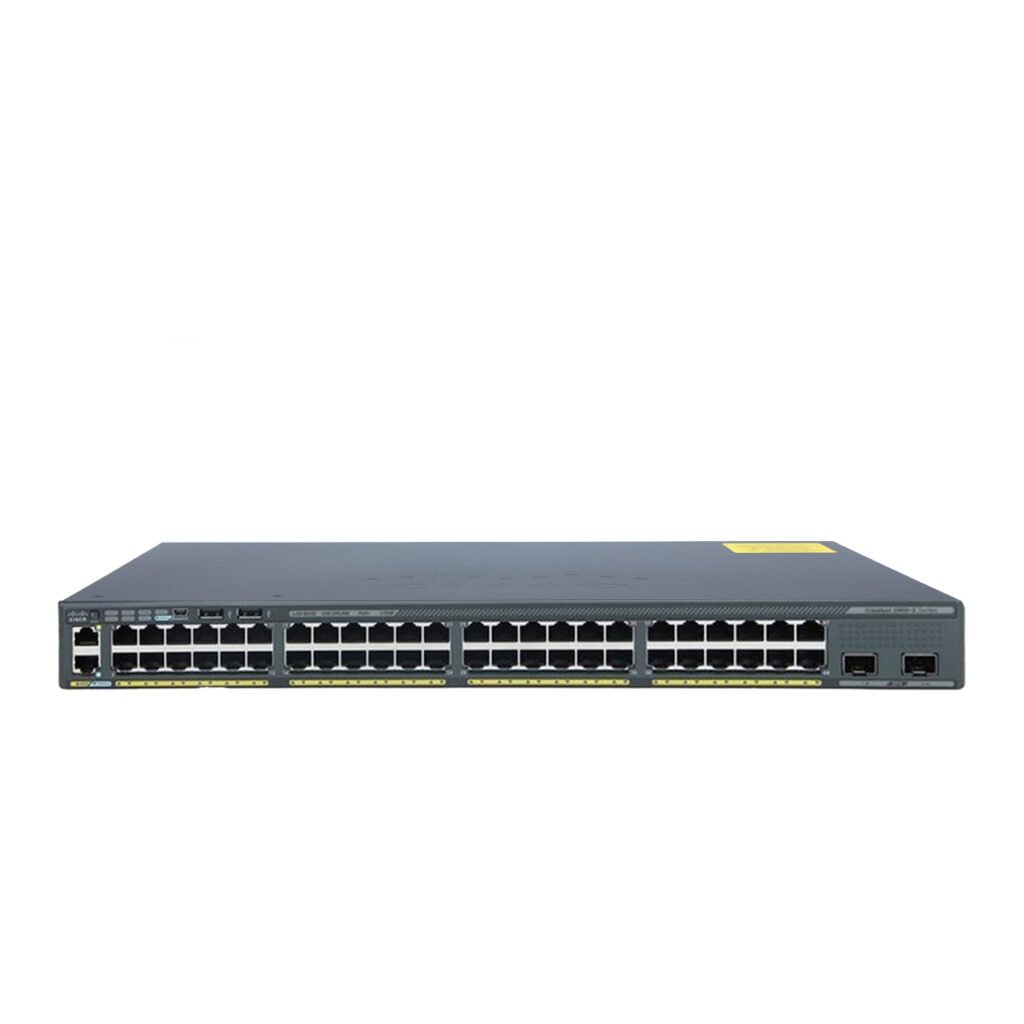
- Cisco Catalyst 2960-X Series Ethernet Switch
- Cisco Catalyst 3650 48 Port PoE+ Gigabit Ethernet Switch
- Cisco Catalyst 3750-X 48 Port PoE+ Gigabit Ethernet Switch
- Cisco Catalyst 3850 48-Port PoE+ Gigabit Ethernet Switch
- Cisco Catalyst 4507R+E Modular Switch
- Cisco Catalyst 9300 24x UPOE Switch
- Cisco Catalyst 9400 Series C9407R Modular Switch
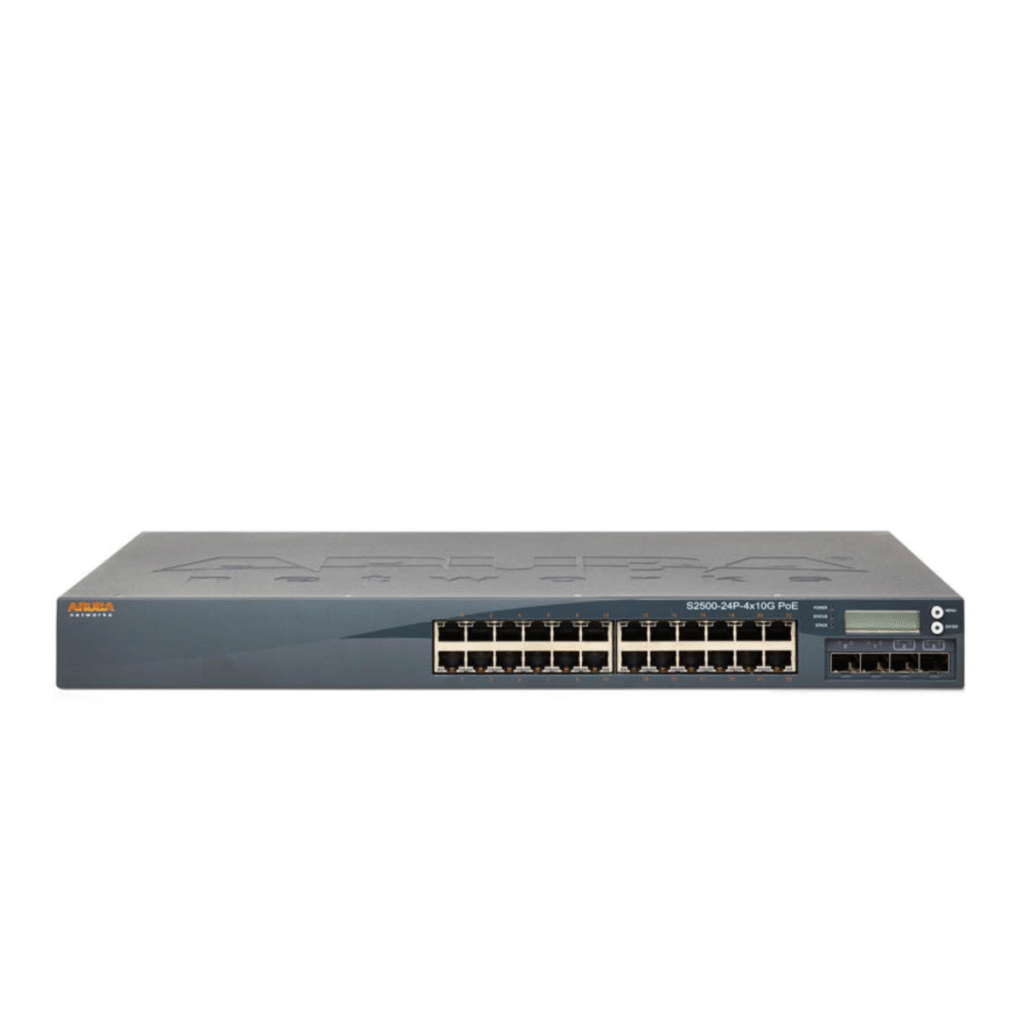
- Aruba Networks S2500-24P-4X10G PoE Gigabit Ethernet Switch
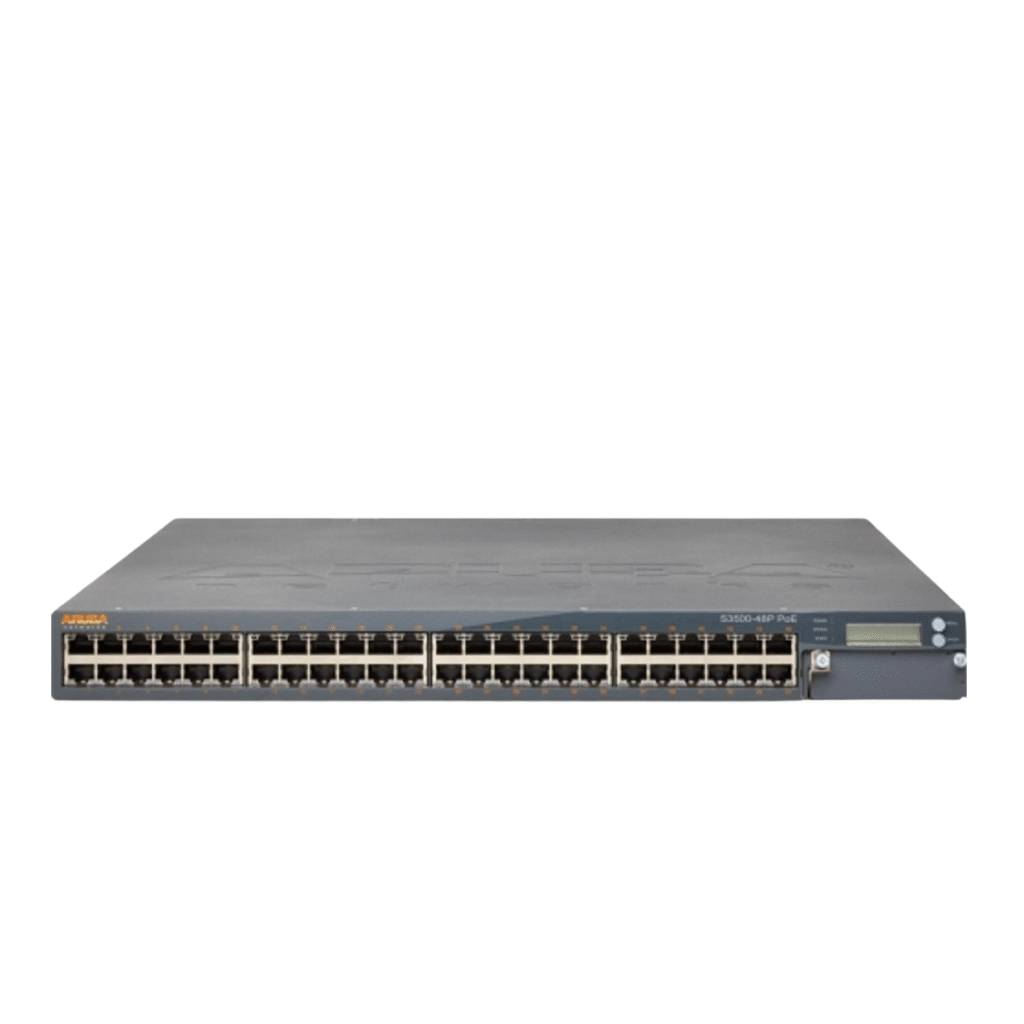
- Aruba Networks S2500-48P-4X10G PoE Gigabit Ethernet Switch
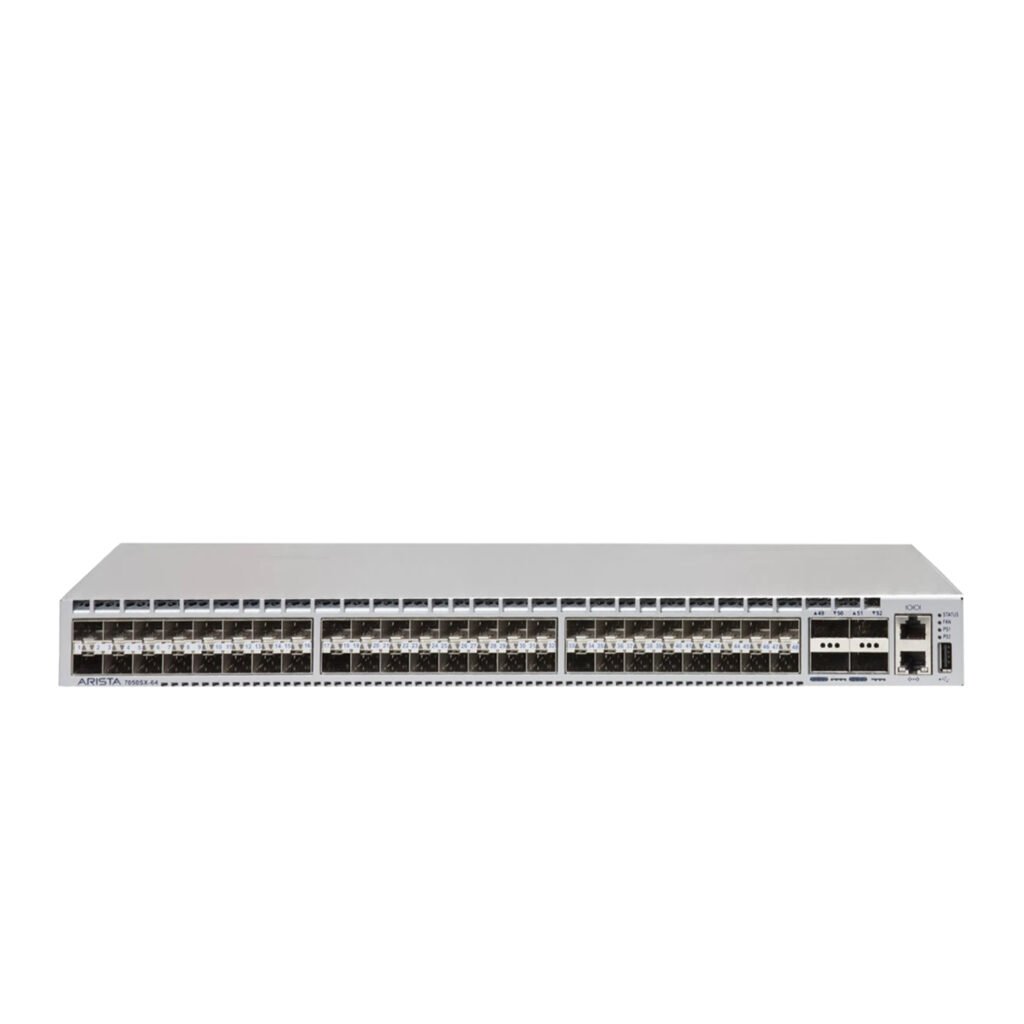
- Arista Networks DCS-7050SX-64 Data Center Switch
The features available on each model can vary significantly.
Businesses should therefore review the exact specifications of the selected switch, including port speeds, uplink capabilities, VLAN support, QoS, redundancy technologies, and management options.
How to Choose a Managed Switch
Selecting a managed switch should start with understanding the organization’s current and future network requirements.
Evaluate Port Density
Determine how many devices need wired connectivity.
Consider both current users and expected future expansion.
Check Uplink Requirements
If the switch will connect to other switches, servers, or storage systems, evaluate the required uplink bandwidth.
Consider PoE Requirements
If the network includes IP phones, wireless access points, security cameras, or other powered devices, consider a PoE-enabled switch.
Review Management Capabilities
Check whether the switch supports the management tools your IT team requires.
These may include:
- Web management
- CLI
- SNMP
- Remote management
- Monitoring
- Configuration automation
Consider Security
Network segmentation, authentication, ACLs, and port security may be important depending on the organization’s security requirements.
Plan for Future Growth
A switch should not only meet current requirements. Consider expected growth in:
- Employees
- Devices
- Applications
- Bandwidth
- PoE equipment
- Network locations
Planning ahead can help prevent premature infrastructure replacement.
Why Choose Smart Vision UAE?
Smart Vision UAE provides enterprise networking equipment for organizations looking to build reliable and scalable IT infrastructures.
Our portfolio includes switching solutions from recognized manufacturers and covers different requirements, including:
- Business networks
- Enterprise environments
- High-density switching
- PoE deployments
- Data center connectivity
- Scalable network infrastructures
Whether you are upgrading an existing network or designing a new infrastructure, selecting the right managed switch can help provide the control and performance required for modern business applications.
Conclusion
The right switching infrastructure can have a significant impact on business network performance.
The six Managed Switch Features discussed in this guide—VLANs, QoS, link aggregation, network monitoring, high-speed uplinks, and redundancy—provide administrators with greater control over traffic and connectivity.
These capabilities can help businesses reduce bottlenecks, prioritize important applications, troubleshoot problems more efficiently, and prepare their networks for future growth.
However, not every business needs every feature. A small office with basic connectivity requirements may only need a simple switch, while a growing enterprise with demanding applications can benefit from advanced managed switching.
Before purchasing, evaluate your current network, expected growth, bandwidth requirements, security policies, PoE needs, and management capabilities.
With the right enterprise switching solution, businesses can build a reliable network foundation that supports productivity today while remaining flexible enough for tomorrow.
Frequently Asked Questions
What are Managed Switch Features?
Managed Switch Features are configuration, monitoring, security, traffic-management, and redundancy capabilities that allow administrators to control and optimize a business network.
Do managed switches improve network speed?
A managed switch does not automatically make an internet connection faster. However, features such as QoS, link aggregation, traffic monitoring, and high-speed uplinks can help optimize how network resources are used and reduce internal bottlenecks.
Are managed switches better than unmanaged switches?
Managed switches provide greater control and are generally more suitable for growing or complex business networks. Unmanaged switches can be appropriate for simple networks that only require basic connectivity.
What is QoS on a managed switch?
Quality of Service (QoS) allows administrators to prioritize certain types of traffic, such as voice and video, so critical applications can receive appropriate network resources.
Why are high-speed uplinks important?
High-speed uplinks provide greater bandwidth between switches, servers, storage systems, and network layers. They can help prevent congestion when many devices generate traffic simultaneously.
What is link aggregation?
Link aggregation combines multiple physical network connections into a logical connection. It can provide additional bandwidth and improve resilience when supported and properly configured.
Can managed switches improve network security?
Yes. Many managed switches support security features such as VLAN segmentation, ACLs, port security, and authentication. These capabilities can help businesses control access and isolate network traffic.
How do I choose the right managed switch?
Consider the number of ports, port speeds, uplink requirements, PoE needs, security features, management capabilities, redundancy requirements, and expected future growth.
Looking to understand the security capabilities available on modern switches? Read our guide on 7 Powerful Network Switch Security Features Every Business Needs to learn how VLANs, ACLs, port security, authentication, and traffic monitoring can strengthen your network.